Most pallet decisions come down to one number: the price per pallet. But a load also costs you the time to receive it, fix problems and pay for it.
The model
For one load:
- Pallet cost: price per pallet × count.
- Freight: zero if the price is delivered, a separate line if it isn't.
- Receiving: time at the dock, plus the cost of holding a door for a late truck.
- Rejects: pallets you sort out, send back or replace, and the time that takes.
- Admin: POs, invoices, vendor setup and the calls in between.
- Misses: what a short or late load costs your production line or your outbound shipments.
The first two are on the quote. The rest are in your receiving logs and AP history, which is why they rarely make the spreadsheet.
Compare delivered prices
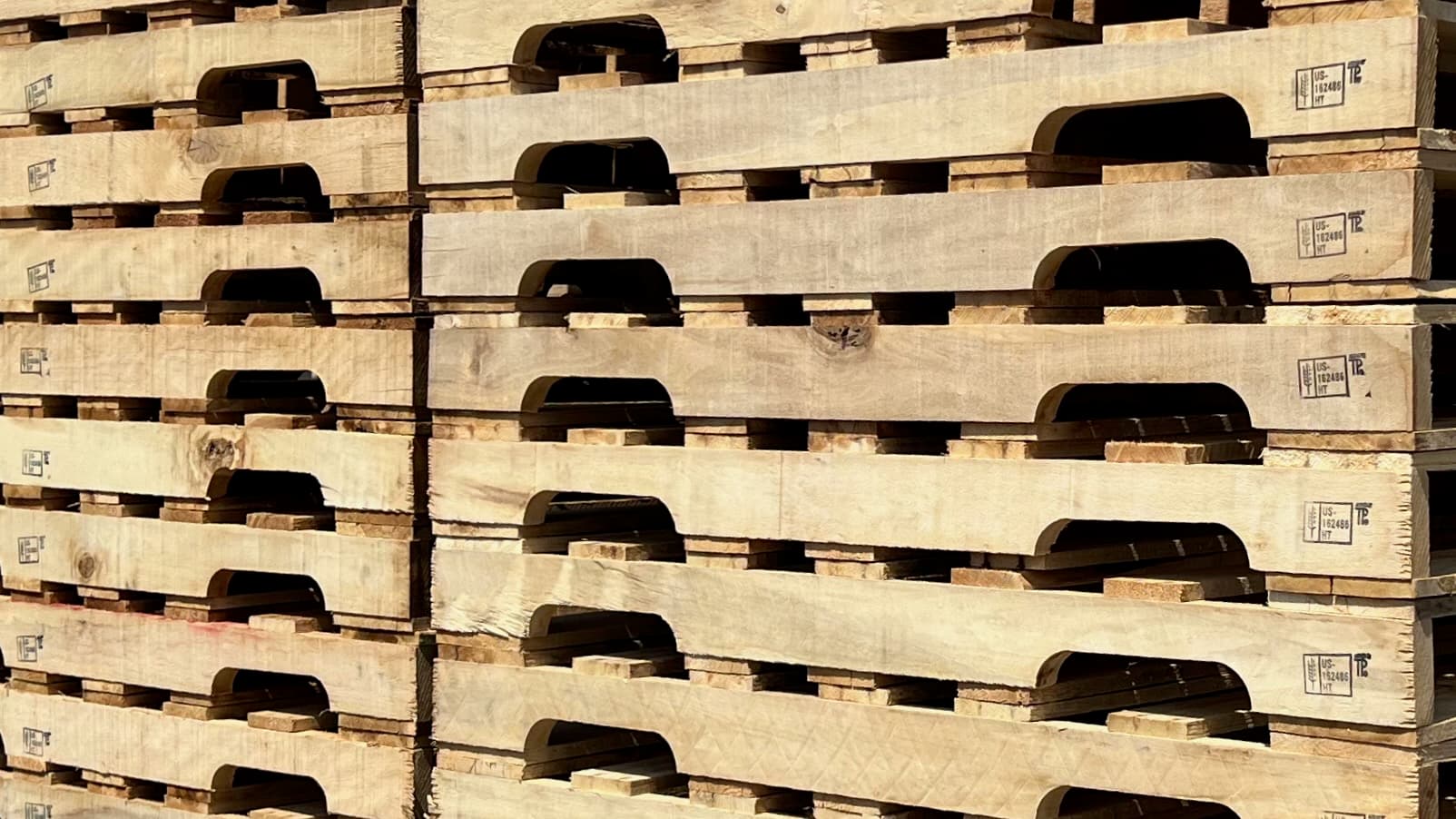
Use delivered prices, not a yard price plus a freight guess. Our prices include freight. A full 53' truck of Grade A 48x40s (616 pallets at $6.75–$8.75) costs $4,158–$5,390 delivered. Loads ship as full trucks, so compare full-truck totals. Alaska and Hawaii are quoted individually.
When buying direct wins
One site, a good yard nearby, a spec that never changes and trucks that arrive on time. If that's you, stay with your yard. A broker adds a margin, and it has to earn it.
When a broker earns its margin
- You run several sites, or sites in different states.
- Your yard misses windows or ships a looser grade than you ordered.
- You need custom sizes or heat-treated pallets your yard doesn't build.
- You want one account manager, one rate card and one invoice format.
- You want a second quote you can actually act on.
What savings to expect
Customers who switch to us typically spend 10–15% less on pallets over a year. This isn't a guarantee. Savings on the other lines depend on your own numbers.
Fill in the model
Fill in one column with your current supplier's numbers and one with ours, for the same grade, count and dock.