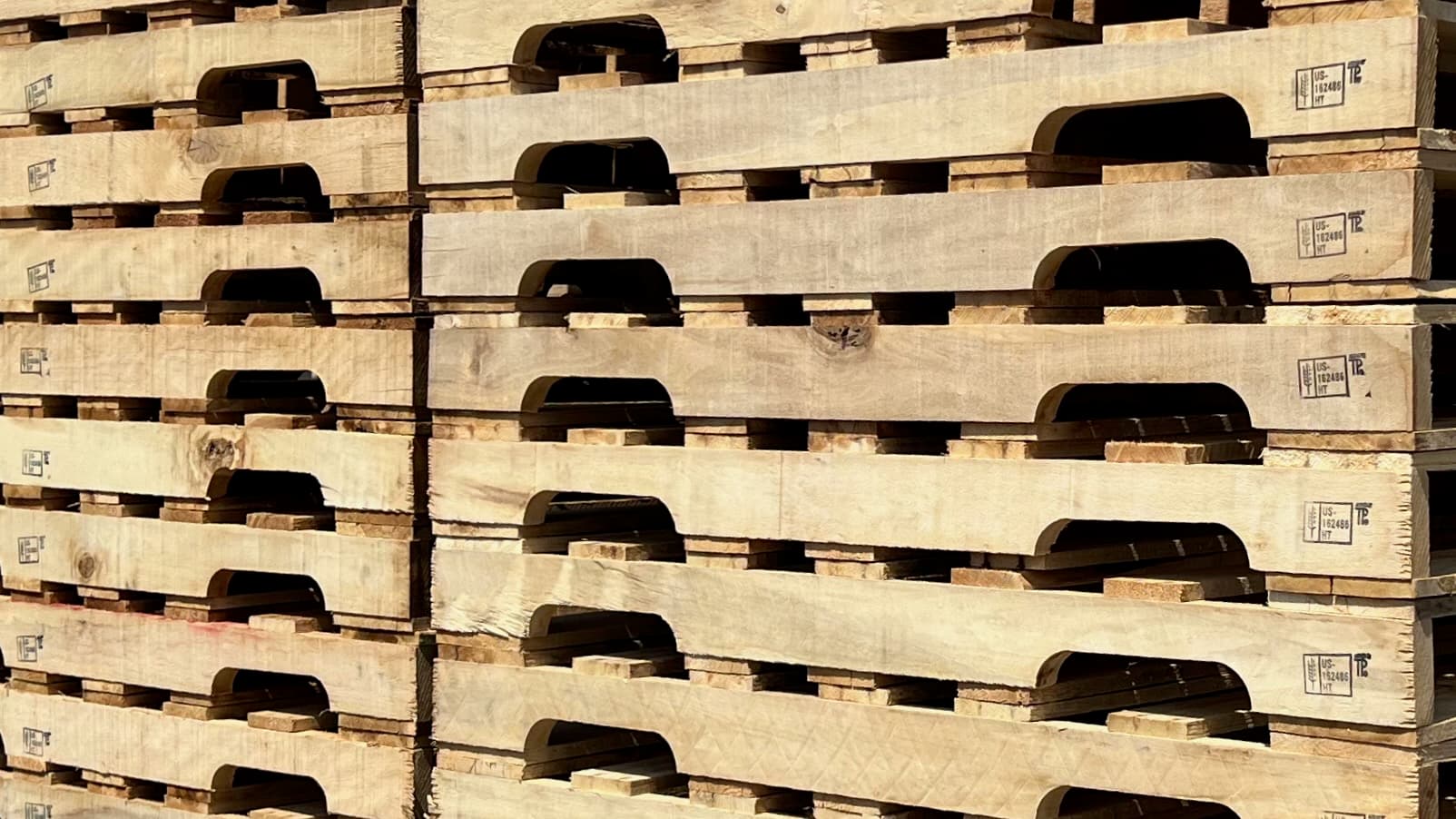
If your product leaves the country on a wood pallet, the pallet has to meet ISPM 15. The rule is simple. Most problems come from the paperwork and from recycled pallets, not from the treatment itself.
What ISPM 15 is
ISPM 15 is the International Plant Protection Convention's standard for wood packaging in international trade: pallets, crates, skids and dunnage. It stops insects and disease from crossing borders in raw wood. Countries that adopt it check for the mark at the border.
How a pallet qualifies
- The wood is debarked.
- It's treated by an approved method. For heat treatment (HT), the core of the wood is held at 56 °C for at least 30 continuous minutes.
- It carries the IPPC mark, applied by a facility working under its country's approved program.
Methyl bromide fumigation (MB) is still in the standard, but the IPPC encourages countries to move away from it and some destinations restrict it. Most buyers simply ask for HT.
What the mark shows
The IPPC symbol, a two-letter country code, the producer's unique number, and the treatment code: HT for heat treatment. It should be legible and permanent, and is normally applied on two opposite sides. In the U.S., the marks are issued through agencies accredited by the American Lumber Standard Committee under USDA APHIS oversight, so you'll usually see the agency's logo too.
What doesn't need it
- Wood 6 mm thick or less.
- Processed wood made with glue, heat or pressure, such as plywood, particleboard and OSB, and pallets molded from it.
- Plastic and metal pallets, which aren't wood packaging at all.
Kiln-dried is not the same thing
Kiln-dried lumber can reach the HT temperature, but it only counts when the finished pallet carries the HT mark. A "KD" label on its own doesn't meet ISPM 15.
Repaired pallets need care
Under ISPM 15, a pallet with more than about a third of its parts replaced counts as remanufactured. It has to be treated again and re-marked, with the old marks removed. Smaller repairs must use treated wood, and the U.S. program is stricter than the standard. An old stamp left on a repaired pallet can get a load refused.
What happens when it's wrong
Border inspectors can treat, destroy or send back wood packaging that doesn't comply, at the importer's or exporter's cost, and the goods on it can sit while that happens. A phytosanitary certificate doesn't fix it: that document covers plant products, not the pallet under them.
Five checks for buyers
- Ask for HT on the quote and on the PO, not just on the phone.
- At the dock, check the mark on a few pallets from different stacks.
- If your forwarder needs the HT certificate, ask for it with the order and keep it in your shipping file.
- Tell your account manager when recycled pallets will go on an export load.
- Check the destination's extra rules with your freight forwarder. Some countries add requirements.
Heat-treated pallets from us add $1.00–$1.50 per pallet, on any grade. The HT certificate is available on request.